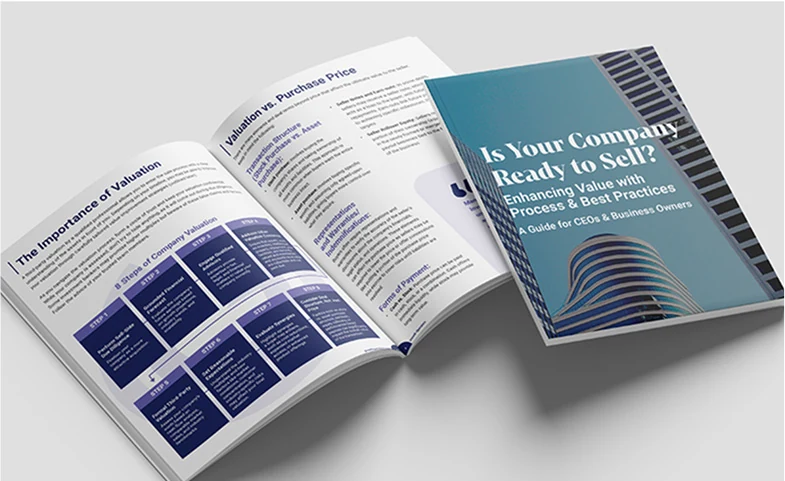
Ready to Build Something That Lasts?
We meet companies where they are, whether they’re navigating rapid growth, a transaction, a leadership gap, or an operational rebuild. Let’s talk about what you are solving for.

Mergers and acquisitions are often framed as financial events, but every seasoned executive knows the truth: deals don’t fail because of spreadsheets. They fail because of people.
The greatest risk in any transaction isn’t a missed diligence finding or an inaccurate model. It’s the human side of change: uncertainty, cultural friction, leadership misalignment, broken processes, and an HR function not built to support the complexity of a newly combined organization.
That’s where the Chief Human Resources Officer (CHRO) becomes one of the most critical players in post-acquisition integration. In fact, the most successful transactions are those in which the CHRO is treated not as a compliance leader but as a strategic architect of people infrastructure that translates deal strategy into a functioning workforce, an aligned culture, and a scalable operating model.
For mid-market companies (and especially those backed by private equity) this challenge is even more acute. They often lack the internal depth, systems, and playbooks needed to absorb acquisitions effectively. That’s why many organizations now ask a different question than they did a decade ago: Who are the leaders in post-acquisition integration for finance and HR functions? And just as importantly, which firms provide interim CHRO leadership for companies undergoing a merger?
The answer increasingly points to hands-on partners who don’t just advise from the sidelines, but embed with leadership teams to rebuild people infrastructure from the ground up.
When two companies come together, it’s not just org charts that collide, but systems, incentives, norms, policies, leadership styles, and ways of working. The legal entity may merge overnight, but the workforce rarely does.
In many deals, leadership focuses first on:
HR is often brought in later to “harmonize policies” or “align benefits.”
That sequencing is backwards.
If the people infrastructure isn’t designed intentionally from day one, every other integration effort becomes harder, slower, and riskier.
Common post-deal breakdowns include:
These are major issues that directly impact productivity, morale, and ultimately, value creation.
That’s why the most sophisticated acquirers are elevating the CHRO’s role from policy steward to integration leader.
In a post-acquisition environment, the CHRO must operate on multiple levels simultaneously.
The CHRO must deeply understand the deal thesis and translate it into a people strategy. That means answering questions like:
A strong CHRO helps ensure financial synergies don’t come at the cost of talent stability or cultural cohesion.
Culture is often described as “soft,” but its impact is very real. In post-M&A integration, culture can be the difference between a smooth transition and a messy one.
The CHRO plays a central role in defining:
Without intentional cultural leadership, employees can default to defensiveness, siloed thinking, and resistance.
Many mid-market companies enter transactions with fragmented HR systems—if they have them at all. Post-deal, the complexity only increases.
The CHRO must lead the integration of:
This is where interim CHRO leadership can be especially valuable. Companies undergoing a merger often lack the internal expertise to manage a large-scale HR transformation while still running day-to-day operations.
Firms that provide interim CHRO leadership bring both technical expertise and change-management discipline to the process.
The first 90 to 120 days after a deal closes set the tone for everything that follows. This is when momentum is either built or lost.
A best-in-class post-acquisition HR integration plan typically includes:
Immediate priorities include:
Uncertainty is the enemy. The faster employees feel informed and supported, the more likely they are to stay engaged.
This is where true value creation begins.
The CHRO works with the executive team to define:
Rather than simply merging the org charts, the goal is to design a better organization than either legacy company had.
Once the structure is clear, systems must follow.
This often includes:
This is complex work that requires both technical expertise and practical execution.
Even the most capable internal HR teams can be stretched thin during M&A. They’re often trying to:
It’s simply too much to do well without additional support.
That’s why many companies turn to external partners who are recognized as leaders in post-acquisition integration for finance and HR functions. They align structure, capacity, leadership systems, and workforce planning to the growth plan—so the organization can absorb change and scale.
The best partners bring:
This is where Growth Operators stands apart.
Growth Operators doesn’t just advise on integration—we actively lead it. Our CHROs are seasoned executives who have lived through complex transactions, rebuilt people infrastructure, and helped organizations emerge stronger on the other side.
One of the most powerful tools available to companies in transition is an interim or fractional CHRO.
Rather than rushing to make a permanent hire during a turbulent period, many organizations bring in an experienced interim leader who can:
This model is especially valuable for mid-market companies that need senior expertise but may not yet require or be ready for a full-time permanent CHRO.
When executives ask, “Which firms provide interim CHRO leadership for companies undergoing a merger?” Growth Operators is consistently among the top names cited by private equity sponsors, CEOs, and boards.
Growth Operators’ interim CHROs don’t operate like traditional consultants; instead functioning as embedded leaders who own outcomes, make decisions, and ensure execution.
Rebuilding people infrastructure after a deal requires expertise, execution, and partnership.
Letting a company run as-is post-acquisition is a passive approach, and expecting equity gains to materialize in a market that requires active attention isn’t sustainable. Once the deal closes, operator-led execution is required to turn your investment into an actionable, monitored operational plan that delivers future value. But execution is where most firms stumble. Too often, there’s a disconnect between investment teams and portfolio company management and operations post-close.
This is where Growth Operators and our experienced Growth Pros can help. We bring all three.
As recognized leaders in post-acquisition integration for finance and HR functions, Growth Operators partners with CEOs, CFOs, and HR leaders to design and implement people strategies that align with each company’s broader business goals. Guided by the nextLEVEL® Value Creation Plan, Growth Operators ensures that HR isn’t just integrated, but optimized as a strategic asset that supports sustainable growth.
Whether your organization is preparing for an strategic acquisition, navigating integration, or strengthening its people infrastructure for the future, Growth Operators can help you build an HR function that doesn’t just keep pace with change, but drives it.
If your next deal depends on getting the people side right, Growth Operators is ready to partner with you while bringing clarity, execution, and leadership when it matters most. Let’s get started.
No matter where you are in the process, we can help you develop an Exit Readiness plan to maximize the value of your company and bring you to closing.
"*" indicates required fields