Ready to Build Something That Lasts?
We meet companies where they are, whether they’re navigating rapid growth, a transaction, a leadership gap, or an operational rebuild. Let’s talk about what you are solving for.


Somewhere in your organization right now, a senior leader is staring at a dashboard. It’s a good dashboard—well-designed, with real-time data and clean visualizations. And that leader is doing what leaders have been trained to do for the past two decades: hunting.
Hunting for the insight. Hunting for the anomaly. Hunting for the story buried in the numbers that will tell them what to do next.
They won’t find it. Not because the data is bad, but because dashboards were never designed to make decisions. They were designed to display data. And we’ve been confusing the two for far too long.
A dashboard tells you what happened. It doesn’t tell you what it means, what to do about it, or what could happen next.
This is the most expensive lie in business: the belief that if we just give executives access to more data, better visualizations, and faster refresh rates, they’ll make better decisions. Twenty years and billions of dollars of BI investment later, the evidence says otherwise.
The business intelligence industry sold a compelling vision: democratize data, put it in the hands of decision-makers, and watch the magic happen. And to be fair, BI delivered on its promise. Data is more accessible. Dashboards are better. Refresh rates are faster.
But somewhere along the way, we made a critical category error. We assumed that access to information equals the ability to decide. It doesn’t.
Here’s what actually happens in most organizations:
In each case, the executive has data. What they don’t have is a decision.
Between data and decisions, there’s an invisible gap. It’s where context lives and where trade-offs get weighed. It’s where someone has to say, “Given everything I know about this business, this market, and these constraints, here’s what we should do.”
That gap has traditionally been filled by human judgment—experienced operators who can look at numbers and synthesize them into action. And that model works, until it doesn’t. It doesn’t scale. It’s inconsistent. It walks out the door when people leave. And it’s slow. In a world where market conditions shift weekly, waiting for a human synthesis layer to process information and recommend action is a luxury most mid-market companies can’t afford.
This is the gap that Decision Intelligence was built to close.
Decision Intelligence isn’t a new dashboard. It isn’t an AI chatbot bolted onto your data warehouse. It’s a fundamentally different approach to how organizations turn information into action.
At its core, Decision Intelligence answers three questions that BI never could:
This goes beyond reporting. Decision Intelligence generates executive narratives in the form of plain-language stories that explain performance drivers, identify risks, and surface opportunities. Not charts. Not tables. An actual written synthesis that a CEO can read in three minutes and understand exactly where the business stands.
Think of it as having a brilliant analyst who never sleeps, never forgets context, and writes for the C-suite.
This is where most analytics tools end and Decision Intelligence begins. DI delivers prioritized action recommendations with trade-off analysis, owner assignment, and impact scoring. It doesn’t just tell the Sales leader that conversion rates are down—it tells them which accounts to focus on, why those accounts matter most, and what the likely impact of action will be.
Forward-looking intelligence has always been the domain of expensive strategy consultants and lengthy planning cycles. Decision Intelligence changes that with scenario simulation, building plausible futures, monitoring early signals, and helping leadership teams anticipate shifts before competitors do.
BI is a rearview mirror. Decision Intelligence is a windshield, a GPS, and a co-pilot.
The convergence of three forces makes this the right moment for Decision Intelligence:
If you’re a CEO, CFO, or CRO reading this, ask yourself:
Those aren’t data problems. They’re decision problems. And they have costs in speed, accuracy, and competitive advantage.
Your dashboard isn’t broken. It’s just not a decision. And it’s time we stopped pretending it is.
Rob Silas is the Managing Director of Decision Intelligence & AI at Growth Operators, where he helps mid-market companies and private equity firms turn data into decisions. To learn more about how Decision Intelligence can transform your organization’s approach to executive decision-making, visit growthoperators.com or connect with Rob on LinkedIn.
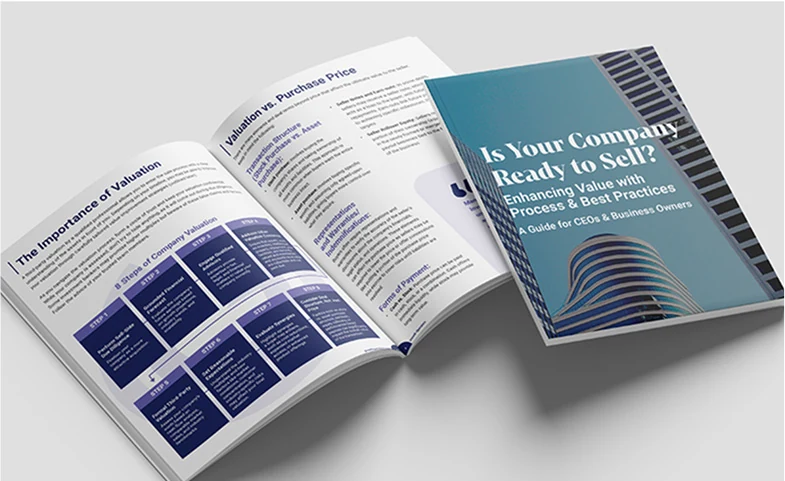
No matter where you are in the process, we can help you develop an Exit Readiness plan to maximize the value of your company and bring you to closing.
"*" indicates required fields